Aromatic Lemongrass. A great source of Vitamins, minerals and insect repellent…Say what?
I first experienced lemongrass about 20 years ago while visiting Vietnam. A small Hanoi cafe, more European than typical Vietnamese in its character, appropriately named Lemongrass. l ordered one of the house specials, Lemongrass Chicken… skewers of tender chicken marinated and grilled to perfection. It was an intriguing flavor that I had not experienced before but clearly enjoyed and wanted to know more about.
Lemongrass is a perennial plant with thin, long leaves that is indigenous to many Asian countries, and quite popular in the cuisines of the former French colonies that the French referred to as “Indochine”…Vietnam, Cambodia & Laos. Today, it is available at some specialty supermarkets as well as most Asian markets. Lemongrass smells like lemon, but it tastes milder and sweeter.
Nutritionally, lemongrass is a good source of vitamins A and C, folate, folic acid, magnesium, zinc, copper, iron, potassium, phosphorus, calcium and manganese. It also has minute traces of B vitamins.
Along with its culinary uses, it has many beneficial medicinal properties including analgesic, anti-inflammatory, antidepressant, antiseptic, antibacterial, antifungal, astringent, diuretic, insecticidal, sedative, and anti-cancer properties.
There are two main ways to cook with lemongrass, and each determines how you handle it. To infuse teas, soups, braising liquids and sauces, trim off the tops and the bases, crush the stalks with the side of a knife to release their aromatic oils, and then cut them into 1-2 inch pieces. Remove the pieces before eating, they tend to be woodsy.
To use lemongrass in marinades, stir-fries, spice rubs, and curry pastes, trim the top and base of the stalks—you want to use only the bottom 4 inches or so. Then peel off any dry or tough outer layers before finely chopping or mincing. Lemongrass holds up to long cooking and gains intensity the longer it’s cooked. Add minced lemongrass at the start of cooking, browning it along with the other aromatics.
Roasted Lemongrass Pork Tenderloin
2 pork tenderloins (Usually sold 2 to a pack)
2 garlic cloves, minced
1 tsp ginger powder
1 tbsp fish sauce
1/4 tsp cayenne pepper
2 tbsp honey
2 tbsp soy sauce
4” piece lemongrass, tender white center, smashed and minced
kaffir lime leaves
non reactive container for marinating (Pyrex works well)
cotton butchers twine
Spread the minced garlic between the two dovetailed tenderloins and tie them securely at 2 inch intervals.Place the tied roast in a shallow non reactive container. Spread the honey on the roast, sprinkle on the fish sauce and then the soy sauce. Season with ginger powder and cayenne pepper. Add the minced lemongrass evenly over the roast then turn to cover and distribute well. Place kaffir lime leaves around.
Cover with plastic wrap and refrigerate for at least 4 hours, preferably overnight. 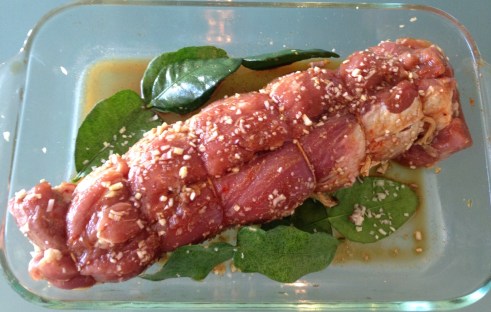
Preheat oven to 450F. Grease a sheet pan or roasting pan with 1 tablespoon of canola oil. Place pan in oven for 5 minutes to heat. Carefully, place roast on hot sheet pan and sear for 5 minutes, making a quarter turn every 5 minutes to sear and brown the roast evenly. After all sides are seared and browned, cook for an additional 10-15 minutes until a meat thermometer reads an internal temperature of 140F. Remove roast fro the oven and tent with aluminum foil. Let rest for 10-15 minutes. Cut into 1/4 inch thick slices.
For Sauce: Pour left over marinade into a sauce pan add 1 tsp of honey, 1 tsp soy sauce and 1/2 tsp of white vinagar. Stir well to combine. Reduce until almost dry. Sauce will brown. Deglaze with 1/2 cup of water, whisk well and simmer low. Deglaze roasting pan with 1/4 cup of water and deglaze well, adding the pork fond to the sauce, combine and adjust consistency if necessary. Serve with steamed Jasmine rice. Garnish with dice chile pepper, spring onion and fresh cilantro.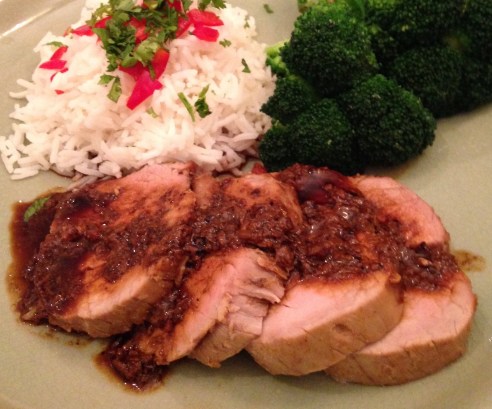
 The Cuisinologist
One Response to “Aromatic Lemongrass. A great source of Vitamins, minerals and insect repellent…Say what?”
Reblogged this on The Cuisinologist.